Reformer vs Mat Grip Socks: What Your Studio Should Stock
If you run a studio, the reformer pilates socks question comes up the moment you start curating retail: do reformer clients and mat clients need different socks, and which should you stock at the front desk? The short answer is that reformer pilates socks prioritize grip placement and a secure midfoot, while mat and barre clients can flex toward full-sole coverage. Getting the mix right keeps clients safe on the carriage and moves more product off your shelf. Here is how to stock smart.
For studio owners, the reformer pilates socks decision is really an inventory decision — match the grip pattern to the apparatus your clients actually use.
Reformer vs mat: the grip difference
| Setting | Grip priority | Sole style |
|---|---|---|
| Reformer | Secure midfoot on the carriage | Targeted grip zones |
| Mat Pilates | All-over traction | Full-sole dotted grip |
| Barre | Balance on hard floors | Full-sole, dense dots |
| Hot Pilates | Grip when sweaty | High-coverage, moisture-friendly |
What clients ask for
Toeless vs closed-toe
Toeless grip socks appeal to clients who want a barefoot feel with security; closed-toe suits cooler studios and clients who prefer full coverage. Stocking both covers the room.
Make them your brand
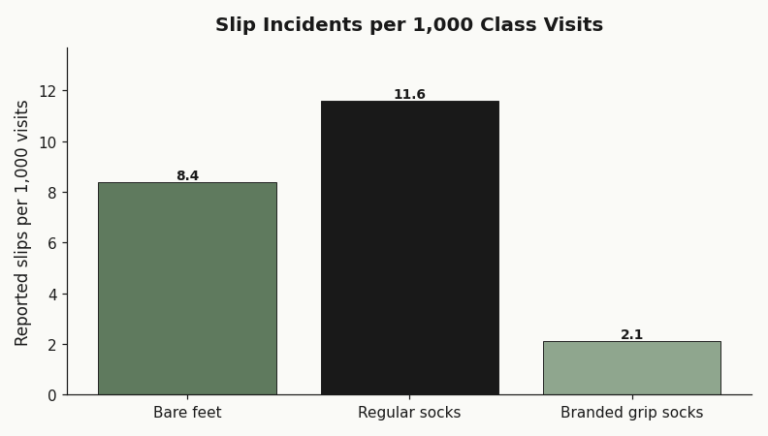
Branded grip socks do double duty: they keep clients safe and turn every class into quiet marketing when clients wear them outside the studio. A clean logo on a quality sock sells itself at the front desk.
Match grip to apparatus, lead with a versatile hero SKU, offer toe-style choices, and put your studio’s brand on them — and your reformer pilates socks become both a safety essential and a reliable retail earner.
More: see options for reformer studios and hot pilates & barre, or read instructor appreciation gift ideas.
Win Free Stuff
Enter below for a chance to win plus receive 10% off your first order.
🎉 You are in!
Check your email for your 10% off code. Good luck!