Grip Sock Fabric Blends: Cotton, Bamboo & Combed-Cotton for Studio Comfort
Grip Sock Fabric Blends: Cotton, Bamboo & Combed-Cotton for Studio Comfort
Ask any studio owner what members complain about first, and grip sock fabric usually beats grip pattern or color. A sock that pills after three washes, traps heat in a hot pilates room, or feels scratchy against a bare foot gets left in a locker no matter how good the studio’s branding looks on it. Grip sock fabric is the decision that decides whether members reach for your sock every class or only the one time they forgot their own.
This guide compares the main grip sock fabric options — standard cotton, combed cotton, and bamboo blends — on comfort, durability, and cost, and helps you match a blend to your studio’s typical class heat and washing frequency.
The three fabric blends studios actually choose between
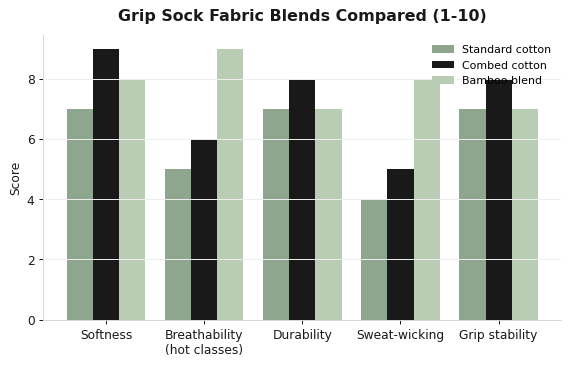
Standard cotton is the baseline: soft enough, affordable, and familiar, but it holds moisture and can feel heavy in a hot room. Combed cotton goes through an extra processing step that removes short fibers and impurities, leaving a noticeably softer, smoother sock that resists pilling far longer — it’s the upgrade most studios notice immediately when they switch.
Bamboo-blend grip sock fabric brings a different strength: natural breathability and moisture-wicking that standard cotton can’t match, which matters enormously for hot pilates, barre, or any studio running a heated room. It costs a bit more per pair to source, but for a studio built around heat, the comfort difference is what keeps members from peeling a sock off mid-class.
Matching fabric to your room temperature
If your studio runs cooler mat classes, combed cotton delivers the best softness-to-cost ratio and holds grip pattern well over time. If you run a heated room regularly, weight the decision toward a bamboo blend — the sweat-wicking performance solves a real discomfort problem that a cheaper fabric can’t fix no matter how good the print looks.
Durability and the real cost of a cheap fabric
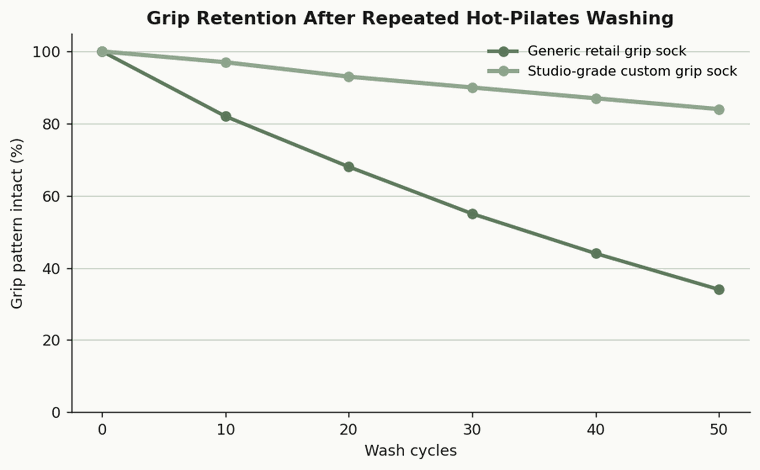
Grip sock fabric quality shows up fastest at the sole, where the grip dots bond to the fabric and where friction from mat work wears fastest. A thin, low-quality cotton base lets grip dots crack and peel loose within a season of heavy studio use, while a denser combed-cotton or bamboo-blend base holds the grip pattern securely through dozens of washes.
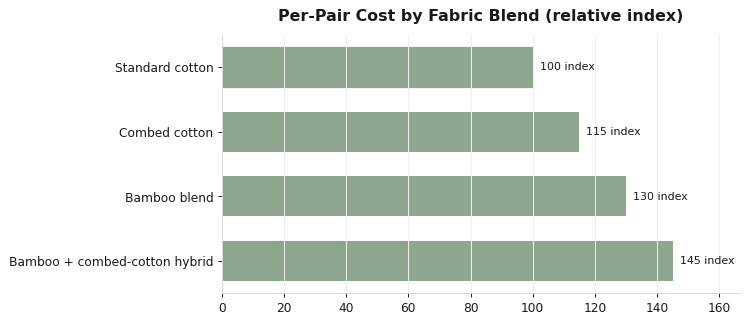
Cost follows quality in a fairly predictable curve. The chart below shows typical per-pair cost by blend, which is useful context when you’re deciding whether the softer, more durable option is worth the incremental spend across a retail order.
Choosing a blend for your studio’s retail line
Most studios end up stocking two tiers rather than picking one blend for everything — a value combed-cotton sock for general retail, and a premium bamboo-blend option positioned as the upgrade for members who ask about heat and sweat.
| Blend | Best for | Retail positioning |
|---|---|---|
| Standard cotton | Budget-conscious retail runs | Entry price point |
| Combed cotton | Cool & mixed-temperature mat studios | Everyday go-to sock |
| Bamboo blend | Hot pilates & barre studios | Premium, sweat-solving upgrade |
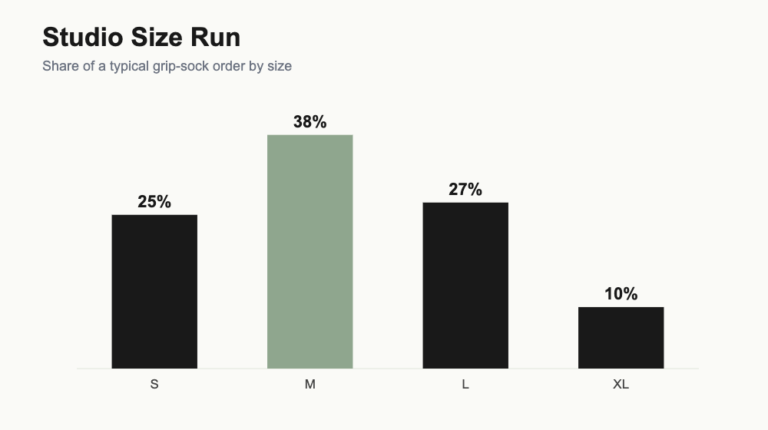
Whichever blend you stock, keep grip pattern and sizing consistent across fabrics so a member’s fit doesn’t change when they upgrade. For seasonal colorways that pair well with a premium bamboo drop, see our companion Seasonal Grip Sock Drops: Building a Studio Retail Calendar, and check fit notes for reformer studios and multi-location franchise systems alongside our custom grip socks range.
Washing and care instructions that protect your fabric investment
The fabric comparison only holds up if studios and members actually wash grip socks correctly, since aggressive washing shortens the life of even a premium bamboo or combed-cotton blend. Recommend a cool or warm gentle cycle and skip high-heat drying, which is the single fastest way to break down grip dot adhesion and fade fabric color regardless of which blend was purchased.
Print basic care instructions on the sock’s packaging or a small hang tag rather than assuming members already know — most people wash grip socks the same way they wash regular athletic socks, which is harder on the fabric and grip pattern than the material was designed for. A simple two-line care note extends the life of every pair sold.
For studio-owned rental or loaner socks that see far more washes than a member-owned pair, favor the more durable combed-cotton or bamboo blend even at a higher upfront cost — the cost-per-wear math favors durability once a pair is washed weekly rather than occasionally, which is exactly the loaner-fleet use case.
Bamboo blends need a gentler wash than cotton
Bamboo fiber is more delicate under high heat and harsh detergent than cotton, so if your studio stocks both blends, keep the care instructions distinct rather than using one generic care label for the whole retail line.
Sourcing and minimum order considerations by fabric
Bamboo-blend fabric typically carries a higher minimum order quantity and longer lead time than standard or combed cotton, since it’s a more specialized material with fewer suppliers. Factor that lead time into your seasonal planning — a bamboo drop timed for a summer heat wave needs to be ordered well before spring if the studio wants it on shelves in time.
Combed cotton sits in a comfortable middle ground for most studios: widely available, moderate lead times, and a noticeably better feel than standard cotton at only a modest cost increase, which is why it works well as a default everyday retail sock rather than a limited premium offering.
If a studio is testing bamboo for the first time, order a smaller trial batch before committing to a full seasonal run. Member feedback after one hot class typically confirms whether the extra cost is worth it for your specific room temperature and class mix, without tying up cash in a large first order.
Ask for a grip-dot adhesion test on any new fabric
Before approving a new fabric blend, request a sample that’s been washed at least ten times and check whether the grip dots are still firmly bonded. A fabric that feels great new but sheds grip dots after a handful of washes isn’t a real upgrade, no matter how soft it started out.
Think about fabric consistency across your whole retail line, not just within a single drop. If a studio’s seasonal colors are always combed cotton but a one-off collaboration or event sock ships in standard cotton, members notice the quality dip immediately and it can quietly undercut trust in the retail line as a whole. Standardizing on one baseline fabric for everyday stock, with bamboo reserved specifically as the labeled premium tier, keeps expectations clear and protects the perceived value of every sock the studio sells, whether it’s a permanent color or a limited seasonal one.
Frequently asked questions
Is bamboo grip sock fabric worth the extra cost?
For hot pilates or barre studios, yes — the breathability and sweat-wicking solve a real discomfort problem. For cooler mat studios, combed cotton usually delivers comparable member satisfaction at a lower cost.
How long does combed-cotton grip sock fabric last?
With regular studio washing, a well-made combed-cotton sock typically holds its softness and grip pattern for a full season or more of heavy use, well outlasting a standard low-cost cotton blend.
Choosing a fabric for your studio’s socks?
Tell us your room temperature and volume and we’ll recommend a grip sock fabric blend that fits.