Reformer vs Mat Grip Socks: What Specs Actually Differ
If your studio runs both reformer and mat classes, you’ve probably wondered whether one grip sock can really serve both. The short answer: it can, but the best grip sock for a reformer carriage isn’t spec’d quite like the best one for a mat floor. The grip density, sole profile, and edge traction that keep a member planted during reformer footwork are different from what a mat class needs. Here’s what actually differs — and how to choose a custom grip sock that keeps every surface in your studio safe and on-brand.
The surfaces aren’t the same — so the grip shouldn’t be either
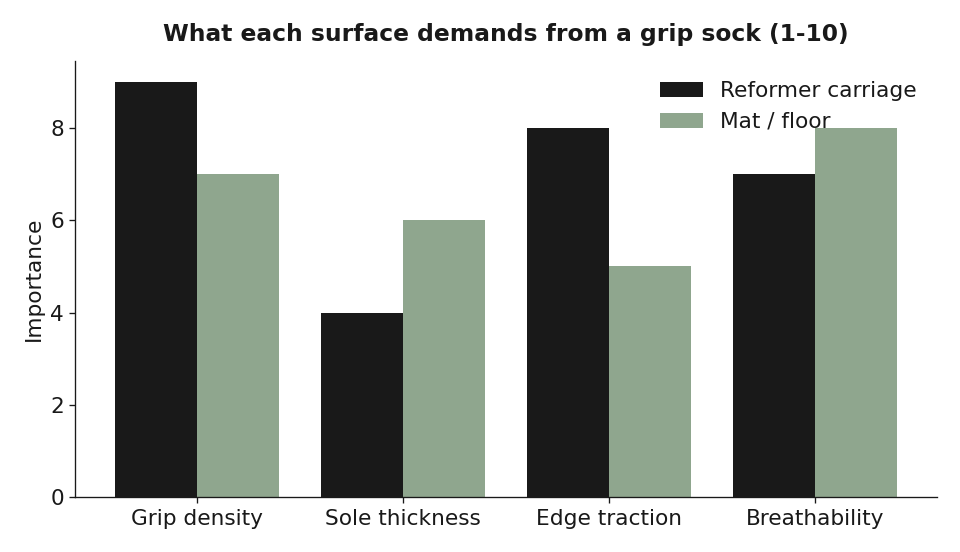
A reformer carriage moves. A mat doesn’t. That single difference drives most of the spec decisions. On a sliding carriage, members need dense, high-coverage grip and strong edge traction to stay anchored through footwork and jump-board work. On a mat or studio floor, grip still matters, but breathability and a comfortable sole profile carry more weight because the surface is stable.
Where members actually slip
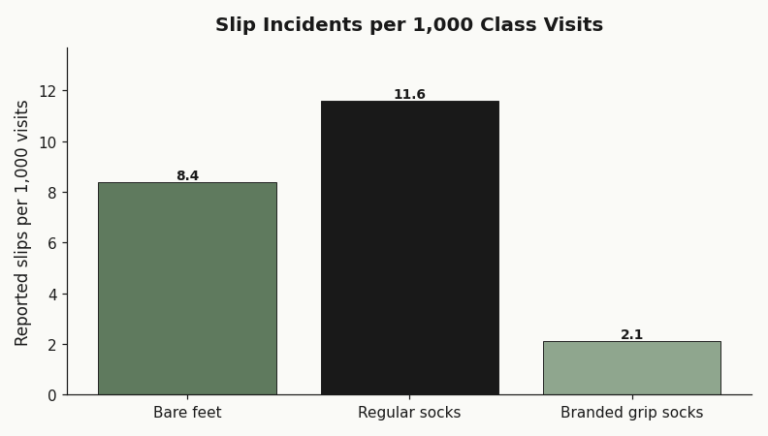
When we look at where studios report slips, the pattern is clear: the highest-risk moments happen on the reformer, especially during footwork and transitions when the carriage is loaded.
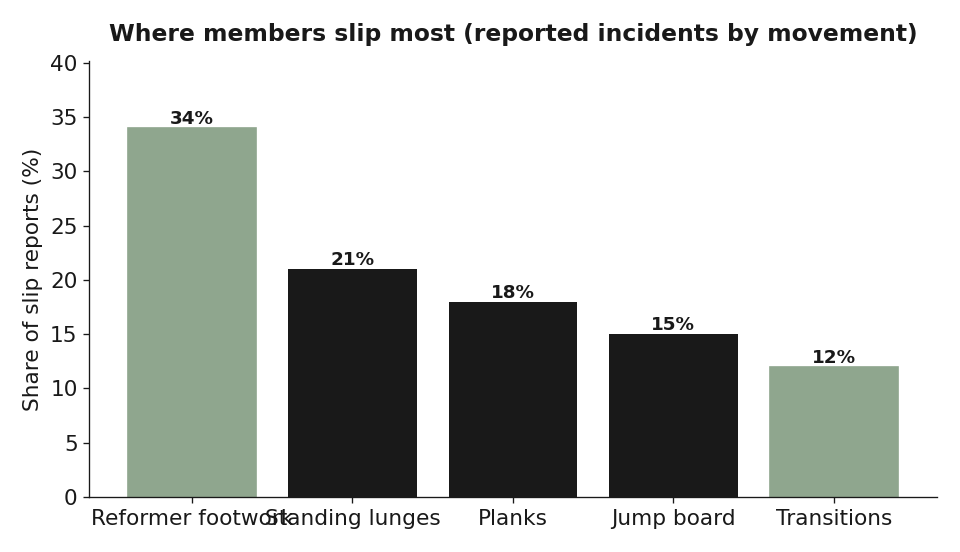
That’s why studios running heavy reformer schedules should spec grip on the higher end of the coverage range. For a reformer-focused studio, under-gripping is a safety and liability issue, not just a comfort one.
How much grip coverage by class format
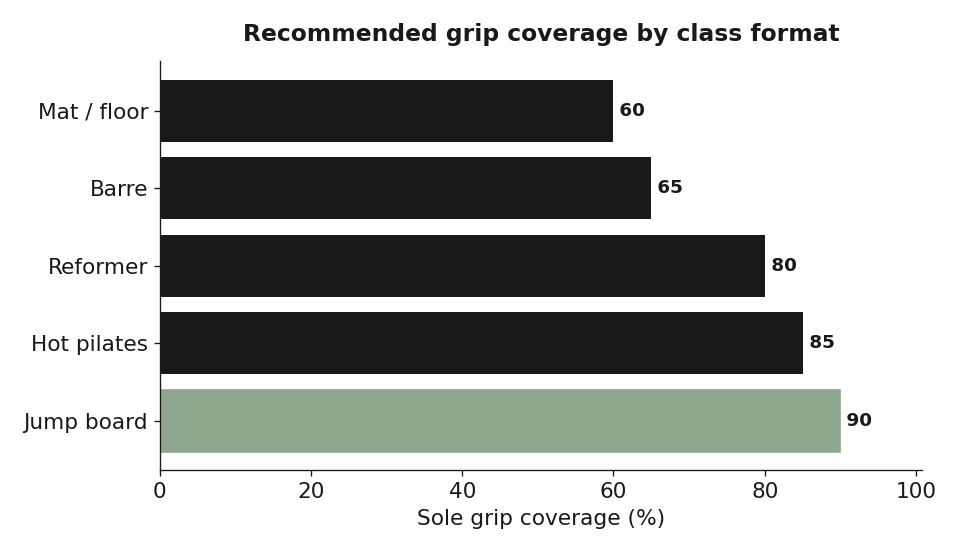
Grip coverage — how much of the sole is patterned — is the spec that most affects performance across formats. Here’s a practical starting point.
Speccing one sock for a mixed schedule
Lead with the hardest surface
If you teach both, spec for the reformer first. A sock that grips well on a carriage will more than handle a mat; the reverse isn’t true.
Don’t over-thicken the sole
Members need to feel the carriage and footbar. A grippy-but-thin sole beats a plush one for proprioception.
Keep the look consistent
One custom design across all formats keeps your mat and reformer classes visually unified — important if you sell socks at the front desk.
Bottom line
Reformer and mat classes ask different things of a grip sock, but you don’t need two product lines to serve both. Spec for the more demanding surface — the reformer — with high grip coverage, strong edge traction, and a thin, breathable sole, and a single custom design will perform safely across your whole schedule while keeping your studio’s look consistent.
Spec grip socks for your studio
Tell us your class formats and we’ll recommend grip coverage, sole profile, and a custom design.
Get a Studio QuoteWin Free Stuff
Enter below for a chance to win plus receive 10% off your first order.
🎉 You are in!
Check your email for your 10% off code. Good luck!