Grip Socks & Studio Liability: Reducing Slips in Reformer Classes
A reformer carriage glides on steel rails, feet press against a polished footbar, and clients hold demanding positions while the whole platform moves. In that environment, bare or ordinary-sock feet slide, and a slip is not just an interrupted class but a genuine liability exposure for the studio owner. Requiring non-slip pilates socks is one of the simplest, most cost-effective controls a studio can put in place to reduce slips, protect clients, and strengthen its risk posture. This guide explains how grip sock safety, waiver policy, and equipment upkeep work together to lower pilates studio liability in reformer classes.
Why Reformer Classes Carry Real Slip Risk
Pilates draws people precisely because it challenges balance and control, and that same quality creates the hazard. On a reformer, a client’s foot placement on the footbar and shoulder blocks is load-bearing while the carriage is in motion. Sweat, smooth footbar surfaces, and slick studio floors all reduce friction at the exact moment a client needs it most. When a foot slips off the bar mid-spring, the result can be a strained joint, a fall from the carriage, or a collision with the frame.
Ordinary socks can make this worse, not better. A smooth cotton sock on a smooth surface is arguably more slippery than bare skin. That is why non-slip pilates socks, with a grip pattern printed or knit into the sole, are the baseline safety expectation in most reformer studios today. They restore friction where clients load their weight, and they signal a studio that takes safety seriously.
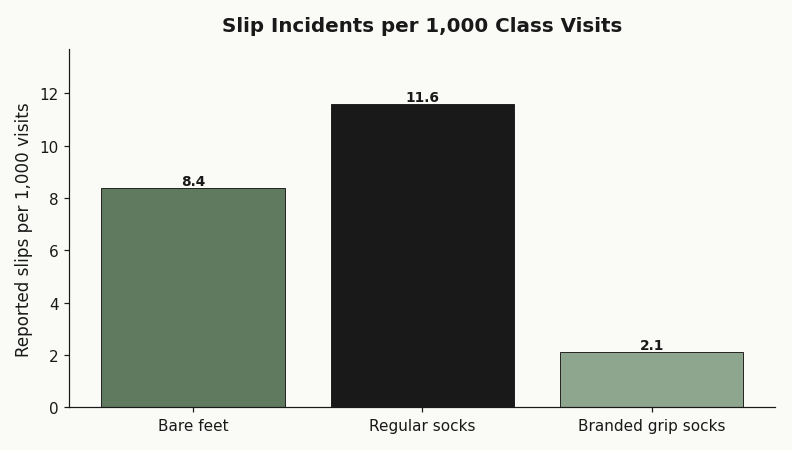
The pattern above is what studio owners consistently report once they adopt a grip-sock requirement: slip incidents fall substantially versus both bare feet and plain socks. Fewer incidents means fewer disrupted classes, fewer client injuries, and fewer of the awkward conversations that follow. It also builds the kind of documented safety record that matters if a claim is ever filed.
Grip Socks as a Documented Safety Control
From a liability standpoint, the value of non-slip pilates socks is not only that they prevent slips, but that requiring them demonstrates you took a reasonable, industry-standard precaution. Insurers and courts look at whether a business exercised due care. A written, enforced grip-sock policy is concrete evidence of that care, alongside your equipment maintenance logs and instructor training records.
Where a Studio Waiver Policy Fits
A grip-sock requirement pairs naturally with your studio waiver policy. Waivers should state that clients must wear non-slip footwear during reformer and equipment classes and acknowledge the movement-based risks of the practice. A waiver is not a force field, and it will not excuse negligence such as unmaintained springs, but it does document informed consent and reinforce that footwear rules are part of participation. Have your waiver reviewed by a local attorney, because enforceability varies by jurisdiction.
The Instructor’s Role in Enforcement
A policy only reduces liability if it is actually enforced, and that falls to your teachers. Instructors should confirm every client has grip on before a reformer class begins, the same way they check for injuries or first-time attendees. A friendly “grab a pair from the front desk” is far easier than an incident report. Consistency is what matters: a rule enforced for some clients but waved through for regulars undermines the documented-control argument you are trying to build. Fold the check into your class-open routine so it becomes automatic rather than a confrontation, and note in your onboarding that grip socks are non-negotiable for equipment work.
Not All Grip Socks Offer Equal Protection
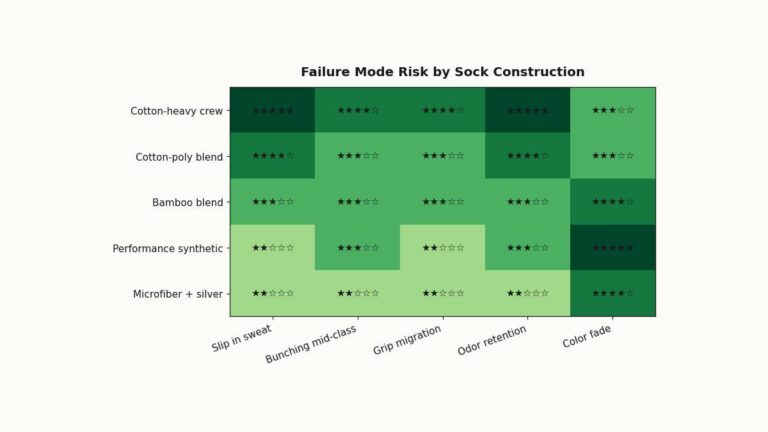
Once you commit to a requirement, the quality of the socks you stock becomes a safety variable in its own right. Grip sock safety depends on how much of the sole is covered by grip, how the pattern is applied, and how well that grip survives repeated washing. A cheap sock with a few sparse dots on the ball of the foot offers far less protection than one with full-coverage grip that reaches the heel and toe, which is where reformer clients actually load.
Application method matters too. Printed silicone grip can wear thin and lose tack over time, while grip knit or bonded into a durable sole holds its bite far longer. That durability is a safety issue, not just a cost issue: a sock that has lost its grip looks fine on the shelf but performs like a plain sock on the carriage.
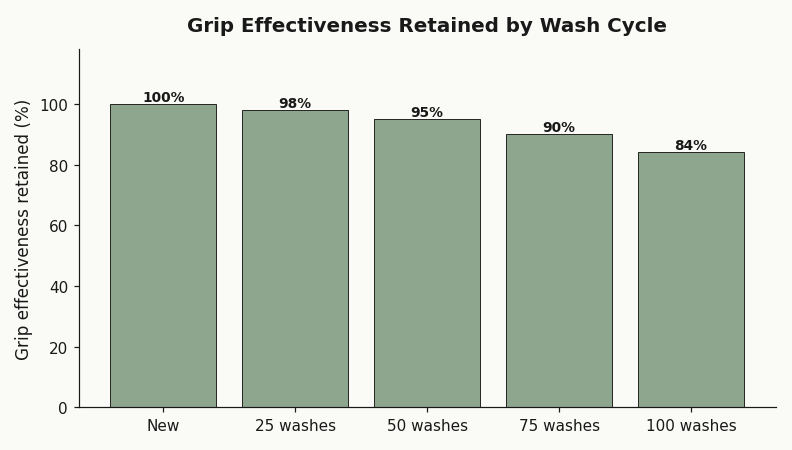
The chart shows why durability belongs in your buying criteria. A quality grip sole retains most of its effectiveness even after 100 washes, so the socks your clients rely on in month six grip nearly as well as they did on day one. When you evaluate suppliers, ask specifically about grip retention over wash cycles, not just the day-one look. We compare grip patterns and coverage in more detail for reformer studios and mat pilates studios.
Coverage placement matters as much as coverage amount. On a reformer, clients load the ball of the foot and toes against the footbar and press the heel into the carriage, so grip that reaches all three zones protects better than a patch concentrated in the arch. When you stock non-slip pilates socks for equipment classes, favor a full-sole pattern over a minimal one, and check that the grip wraps far enough toward the toe to hold during footwork sequences where the heel lifts.
Building a Practical Grip-Sock Program
Turning safety intent into a working policy takes a few coordinated steps. Here is the sequence most well-run studios follow.
| Step | What to do | Why it reduces liability |
|---|---|---|
| 1. Write the rule | State grip socks are required for reformer and equipment classes | Creates a clear, enforceable standard |
| 2. Update the waiver | Add non-slip footwear language and risk acknowledgment | Documents informed consent |
| 3. Stock quality socks | Sell full-coverage, wash-durable non-slip pilates socks at the desk | Ensures the control actually works |
| 4. Communicate it | Booking confirmations, signage, and instructor reminders | Shows consistent enforcement |
| 5. Log and maintain | Track incidents and service reformers on schedule | Builds a due-care paper trail |
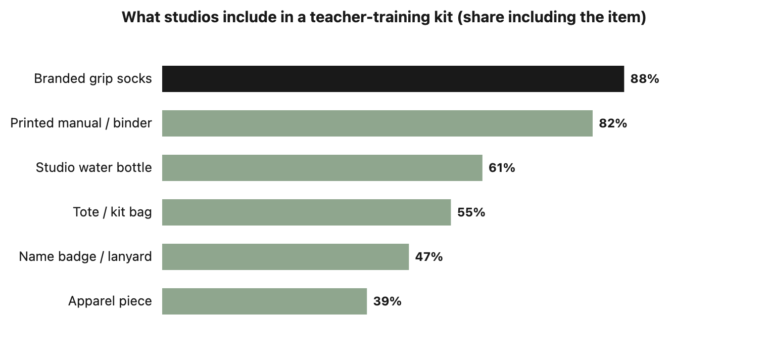
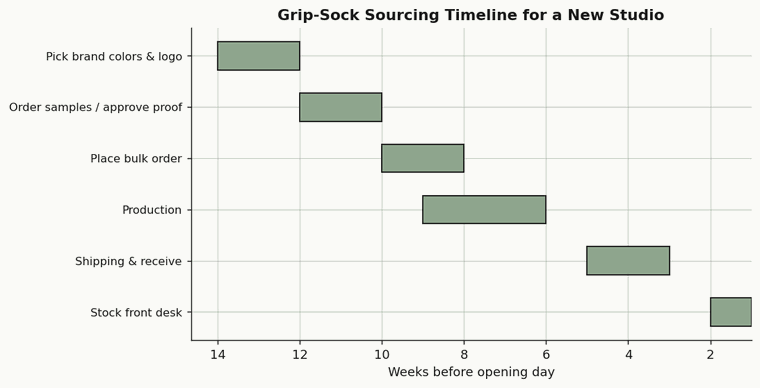
Owning the sock supply is the quiet win here. When you sell your own branded, quality-controlled pairs, you guarantee that every client on a carriage is wearing grip you trust rather than whatever thin pair they grabbed at a discount store. Studios often build this into onboarding, teacher-training kits, and instructor gifts, so grip socks become part of the culture rather than an afterthought. New studios can bake the policy in from day one during their launch planning.
The Bottom Line on Slips and Liability
Reducing slips in reformer classes is not about a single fix, but non-slip pilates socks are the highest-leverage, lowest-cost piece of the puzzle. Require them, back the rule with a sound waiver, stock socks that keep their grip wash after wash, and keep your equipment maintained. Do those four things and you protect your clients first and your studio second, which is exactly the order that keeps a business healthy. If you are weighing how to source your own branded pairs, our companion guide on white-label versus custom-knit grip socks breaks down the options.
Outfit Your Reformer Classes Safely
Tell us your class formats and headcount, and we’ll help you build a durable, full-coverage grip-sock program for your studio.
Get a Studio QuoteWin Free Stuff
Enter below for a chance to win plus receive 10% off your first order.
🎉 You are in!
Check your email for your 10% off code. Good luck!