Grip Sock Packaging & Unboxing for Studio Retail Sales
Grip Sock Packaging and Unboxing for Studio Retail Sales
At the front desk, grip sock packaging is doing more selling than most studio owners realize. A pair that looks premium on the rack and feels considered in the hand converts a curious client into a buyer — and turns a functional necessity into a piece of studio branding clients are happy to carry out the door. Good grip sock packaging is cheap leverage on a product you’re already selling.
This guide breaks down the packaging formats that work for studio retail, what they cost per pair at different volumes, and the small unboxing touches that lift perceived value without wrecking your margin.
Packaging formats for studio retail
Three formats dominate. A simple header card with a belly band is the lowest-cost option and reads clean on a rack. A branded sleeve or box adds a premium feel for gift-ready pairs. A hang-tag with a knotted pair suits impulse placement right at the register. Match the format to where the socks live in your space.
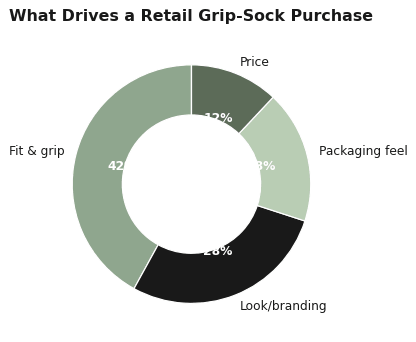
Notice that while fit and grip close most sales, look and packaging feel together drive a large minority — which is exactly the margin you capture by upgrading from a bare pair to considered grip sock packaging.
What packaging actually costs per pair
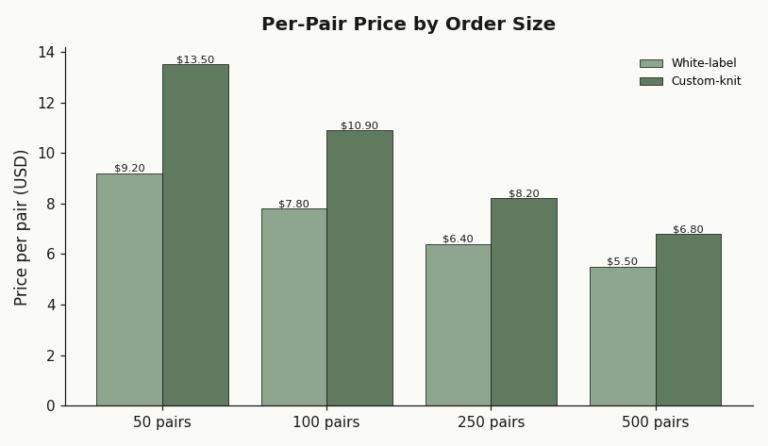
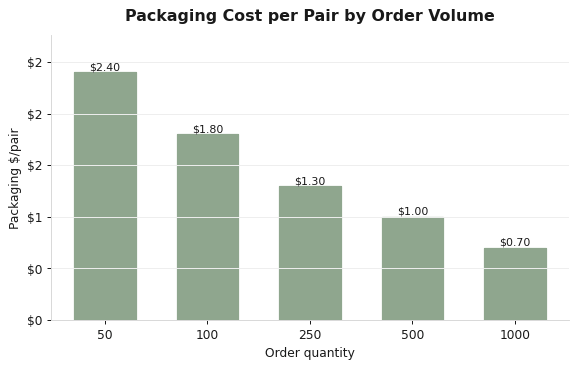
Packaging cost per pair drops steeply with volume, just like the socks themselves. At small quantities a printed box can rival the cost of the sock; at scale it becomes a rounding error. The curve below shows the typical trajectory.
Sustainable options clients notice
Recyclable kraft sleeves and soy-ink printing photograph beautifully and align with the wellness values of most studio clientele. They often cost the same as glossy alternatives while signaling that your brand pays attention — a small story your front desk can tell.
Unboxing touches that lift value
The difference between forgettable and share-worthy is a few grams of intention: a thank-you card with a class tip, a QR code to your schedule, or a knotted presentation instead of a loose pair. These cost pennies and turn a sock sale into a brand impression that travels home in a client’s bag.
| Format | Best placement | Relative cost |
|---|---|---|
| Header card + band | Open rack | $ |
| Branded sleeve | Shelf / gift | $$ |
| Box + insert | Register / gift | $$$ |
Consistency matters as much as format — keep packaging aligned with the rest of your studio merch. For more on that, see our custom grip socks range and our companion guide, our Men’s Grip Socks for Pilates Studios: Sizing & Demand. Ready to package a run? get a studio quote.
Designing packaging that fits your studio’s brand
Great grip sock packaging is an extension of your studio’s visual identity, not an afterthought. Carry your logo, type, and color palette from your walls and app onto the sleeve or box so a pair of socks feels like part of the same world a client already trusts. Restraint reads premium: a clean logo, one accent color, and quality stock almost always look more expensive than a busy, over-printed wrap. Leave a little negative space so the product and the brand can breathe.
Think about the touchpoints a client actually experiences. The front panel is what sells on the rack, so lead with the brand and a clear size marker. The back can carry a short care note, grip-pattern callout, or a QR code to your schedule. If your socks are gift-worthy, a rigid sleeve or small box elevates the moment; for everyday impulse buys at the register, a header card keeps cost down while still looking intentional.
Sustainable materials and the studio audience
Wellness clients notice packaging choices, and sustainable materials align naturally with a pilates studio’s values. Recyclable kraft board, soy or water-based inks, and minimal plastic communicate care without adding cost in most cases. A recyclable belly band around a folded pair is inexpensive, photographs beautifully, and avoids the throwaway feel of a shrink-wrapped sock. If you use any window or laminate, choose recyclable or compostable options and say so on the pack.
Sustainability is also a story your front desk can tell in a sentence, and stories drive attachment. ‘Our packaging is recyclable and printed with soy inks’ is the kind of small detail that makes a brand feel considered. Just make sure claims are accurate; specific, honest language (‘recyclable kraft sleeve’) builds more trust than vague buzzwords.
Costing, ordering, and protecting your margin
Treat packaging as a line item with a target, not an open-ended add-on. A useful rule is to keep packaging under roughly ten percent of the sock’s retail price; above that, simplify the format before you compromise the sock itself. Because per-pair packaging cost falls steeply with volume, ordering packaging in step with your sock runs is the cheapest path — a printed box that is prohibitive at fifty pairs becomes a rounding error at five hundred.
Order a little packaging overage to cover damaged sleeves and future singles, and standardize on one or two formats so reorders stay simple. Keeping the design modular — same sleeve, swappable size sticker — lets you restock without re-running artwork every time. That discipline keeps both your margin and your brand consistent across seasons, and it means a mid-season restock never forces you to redesign or reprint the whole packaging line just to add a few pairs to the rack.
It also helps to review packaging cost against retail price once a season. As sock costs shift or you introduce a premium line, revisit whether the format still earns its keep; a small box that made sense on a gift pair may be overkill on an everyday impulse buy, and trimming it back protects margin without touching sock quality.
Common questions about grip sock packaging
What packaging format sells best at a studio front desk?
A header card with a belly band is the workhorse for open-rack retail: low cost, clean look, easy to hang or stack. Step up to a branded sleeve or small box for gift-ready pairs or a premium positioning. Match the format to where the socks live in your space and to your price point.
How much should packaging cost per pair?
Aim to keep it under about ten percent of retail price. At studio volumes a simple sleeve or header card often lands well under that, while rigid boxes cost more and suit gifting. Packaging cost drops sharply with order size, so buying in step with your sock runs keeps it economical.
Is sustainable packaging worth the switch?
For a wellness audience, usually yes. Recyclable kraft and soy-ink printing frequently cost about the same as glossy alternatives, photograph well, and reinforce your brand values — a low-risk upgrade that your front desk can talk about.
What small touches lift perceived value the most?
A knotted presentation instead of a loose pair, a thank-you card with a class tip, and a QR code to your schedule each cost pennies and make the purchase feel considered. Together they turn a functional sock into a branded moment clients carry home.
Want grip socks that sell themselves on the rack?
We’ll design branded packaging that matches your studio and protects your margin.
Get a Studio QuoteGrip Sock Packaging and Unboxing for Studio Retail Sales
At the front desk, grip sock packaging is doing more selling than most studio owners realize. A pair that looks premium on the rack and feels considered in the hand converts a curious client into a buyer — and turns a functional necessity into a piece of studio branding clients are happy to carry out the door. Good grip sock packaging is cheap leverage on a product you’re already selling.
This guide breaks down the packaging formats that work for studio retail, what they cost per pair at different volumes, and the small unboxing touches that lift perceived value without wrecking your margin.
Packaging formats for studio retail
Three formats dominate. A simple header card with a belly band is the lowest-cost option and reads clean on a rack. A branded sleeve or box adds a premium feel for gift-ready pairs. A hang-tag with a knotted pair suits impulse placement right at the register. Match the format to where the socks live in your space.
Notice that while fit and grip close most sales, look and packaging feel together drive a large minority — which is exactly the margin you capture by upgrading from a bare pair to considered grip sock packaging.
What packaging actually costs per pair
Packaging cost per pair drops steeply with volume, just like the socks themselves. At small quantities a printed box can rival the cost of the sock; at scale it becomes a rounding error. The curve below shows the typical trajectory.
Sustainable options clients notice
Recyclable kraft sleeves and soy-ink printing photograph beautifully and align with the wellness values of most studio clientele. They often cost the same as glossy alternatives while signaling that your brand pays attention — a small story your front desk can tell.
Unboxing touches that lift value
The difference between forgettable and share-worthy is a few grams of intention: a thank-you card with a class tip, a QR code to your schedule, or a knotted presentation instead of a loose pair. These cost pennies and turn a sock sale into a brand impression that travels home in a client’s bag.
| Format | Best placement | Relative cost |
|---|---|---|
| Header card + band | Open rack | $ |
| Branded sleeve | Shelf / gift | $$ |
| Box + insert | Register / gift | $$$ |
Consistency matters as much as format — keep packaging aligned with the rest of your studio merch. For more on that, see our custom grip socks range and our companion guide, our Men’s Grip Socks for Pilates Studios: Sizing & Demand. Ready to package a run? get a studio quote.
Designing packaging that fits your studio’s brand
Great grip sock packaging is an extension of your studio’s visual identity, not an afterthought. Carry your logo, type, and color palette from your walls and app onto the sleeve or box so a pair of socks feels like part of the same world a client already trusts. Restraint reads premium: a clean logo, one accent color, and quality stock almost always look more expensive than a busy, over-printed wrap. Leave a little negative space so the product and the brand can breathe.
Think about the touchpoints a client actually experiences. The front panel is what sells on the rack, so lead with the brand and a clear size marker. The back can carry a short care note, grip-pattern callout, or a QR code to your schedule. If your socks are gift-worthy, a rigid sleeve or small box elevates the moment; for everyday impulse buys at the register, a header card keeps cost down while still looking intentional.
Sustainable materials and the studio audience
Wellness clients notice packaging choices, and sustainable materials align naturally with a pilates studio’s values. Recyclable kraft board, soy or water-based inks, and minimal plastic communicate care without adding cost in most cases. A recyclable belly band around a folded pair is inexpensive, photographs beautifully, and avoids the throwaway feel of a shrink-wrapped sock. If you use any window or laminate, choose recyclable or compostable options and say so on the pack.
Sustainability is also a story your front desk can tell in a sentence, and stories drive attachment. ‘Our packaging is recyclable and printed with soy inks’ is the kind of small detail that makes a brand feel considered. Just make sure claims are accurate; specific, honest language (‘recyclable kraft sleeve’) builds more trust than vague buzzwords.
Costing, ordering, and protecting your margin
Treat packaging as a line item with a target, not an open-ended add-on. A useful rule is to keep packaging under roughly ten percent of the sock’s retail price; above that, simplify the format before you compromise the sock itself. Because per-pair packaging cost falls steeply with volume, ordering packaging in step with your sock runs is the cheapest path — a printed box that is prohibitive at fifty pairs becomes a rounding error at five hundred.
Order a little packaging overage to cover damaged sleeves and future singles, and standardize on one or two formats so reorders stay simple. Keeping the design modular — same sleeve, swappable size sticker — lets you restock without re-running artwork every time. That discipline keeps both your margin and your brand consistent across seasons, and it means a mid-season restock never forces you to redesign or reprint the whole packaging line just to add a few pairs to the rack.
It also helps to review packaging cost against retail price once a season. As sock costs shift or you introduce a premium line, revisit whether the format still earns its keep; a small box that made sense on a gift pair may be overkill on an everyday impulse buy, and trimming it back protects margin without touching sock quality.
Common questions about grip sock packaging
What packaging format sells best at a studio front desk?
A header card with a belly band is the workhorse for open-rack retail: low cost, clean look, easy to hang or stack. Step up to a branded sleeve or small box for gift-ready pairs or a premium positioning. Match the format to where the socks live in your space and to your price point.
How much should packaging cost per pair?
Aim to keep it under about ten percent of retail price. At studio volumes a simple sleeve or header card often lands well under that, while rigid boxes cost more and suit gifting. Packaging cost drops sharply with order size, so buying in step with your sock runs keeps it economical.
Is sustainable packaging worth the switch?
For a wellness audience, usually yes. Recyclable kraft and soy-ink printing frequently cost about the same as glossy alternatives, photograph well, and reinforce your brand values — a low-risk upgrade that your front desk can talk about.
What small touches lift perceived value the most?
A knotted presentation instead of a loose pair, a thank-you card with a class tip, and a QR code to your schedule each cost pennies and make the purchase feel considered. Together they turn a functional sock into a branded moment clients carry home.
Want grip socks that sell themselves on the rack?
We’ll design branded packaging that matches your studio and protects your margin.
Get a Studio Quote